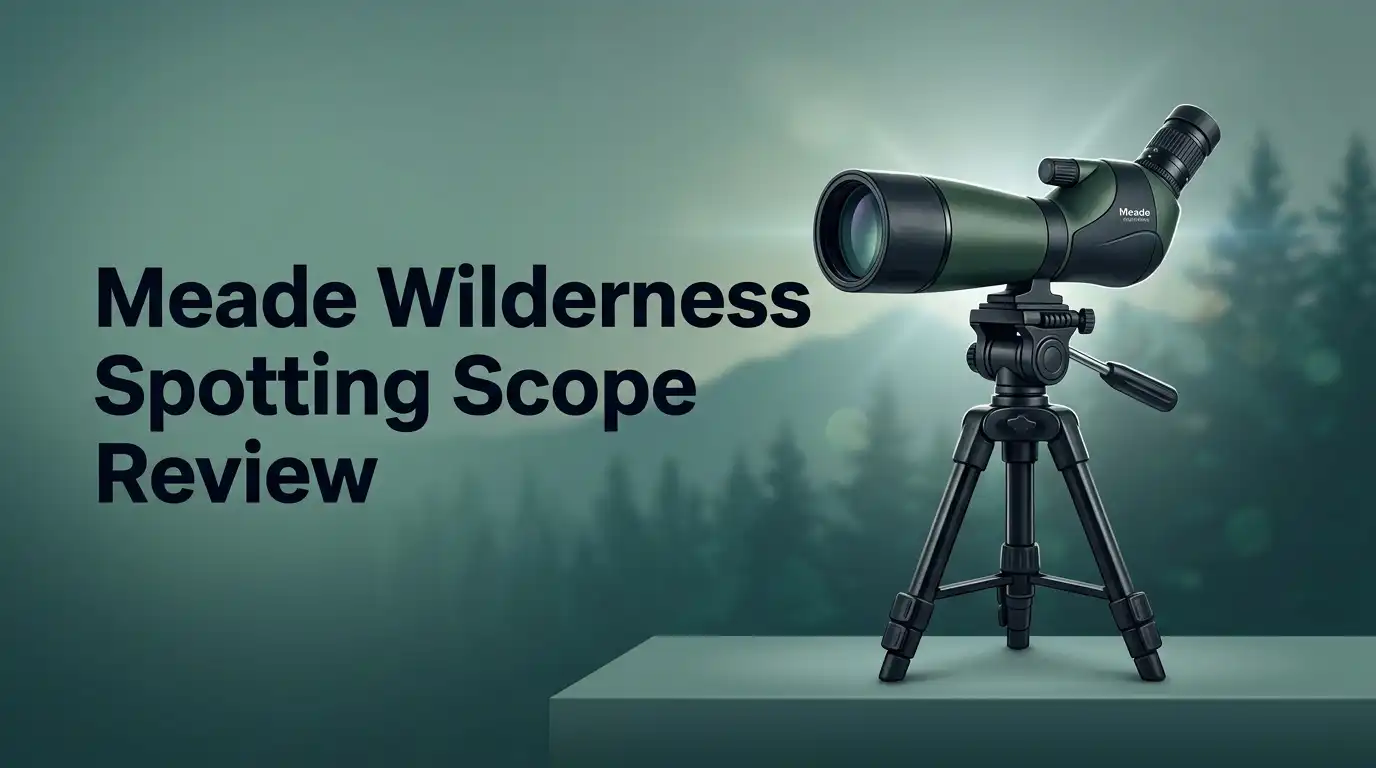
Meade Wilderness Spotting Scope Review 2026: Still Worth It?
Long distance viewing gear gets confusing fast. Prices run from sixty dollars to six thousand. Somewhere in the middle sits the Meade Wilderness line, a family of porro prism spotting scopes that birders and range shooters keep asking about.
You may have seen one at a hawk watch or on a bench at a rifle range. You may also have noticed that stock comes and goes.
This review covers what the Meade Wilderness actually delivers in 2026. I look at glass quality, body feel, the zoom eyepiece, the included accessories, and the flaws that marketing copy skips. You get honest notes on where this scope wins and where it loses. By the end you will know if it belongs on your tripod or if your money should go elsewhere.
In a Nutshell:
- Three sizes exist. The Wilderness family ships in 65mm, 80mm, and 100mm objective versions. The 80mm model gives the best balance of brightness and portability. The 100mm model is heavy and demands a serious tripod.
- The build is genuinely tough. Thick rubber armor, nitrogen purged interior, waterproof and fog proof sealing. This scope survives rain, snow, and truck bed abuse without complaint.
- Optics are good, not elite. BaK4 porro prisms and fully multi coated lenses produce bright, sharp images at low power. Image quality drops noticeably past 45x, which is common in this price bracket.
- Accessories are included. You get a soft carry case, a camera adapter, and a cleaning cloth. A T ring and a tripod are not included, so budget extra.
- Availability is the real problem in 2026. Meade has scaled back this line and several retailers list it as discontinued. Stock appears in waves, and prices swing hard because of that.
- Best value target buyer. Casual birders, hunters, and range shooters who want a rugged 80mm scope under three hundred dollars. Serious birders chasing warblers at dusk should spend more.
What Is the Meade Wilderness Spotting Scope?

Last update on 2026-09-25 / Affiliate links / Images from Amazon Product Advertising API Some of the links on this website are affiliate links, which means that at no additional cost to you, I earn a commission if you click through and make a purchase. I only recommend products and services that I believe will add value to my readers. Thank you for your support!
The Meade Wilderness is a zoom spotting scope built for outdoor use rather than lab precision. It uses a porro prism design, which is an older and simpler layout than the roof prisms found in premium scopes. Porro prisms cost less to make and pass light well, so budget makers love them.
The 80mm model offers 20x to 60x magnification through a fixed zoom eyepiece. The eyepiece sits at a 45 degree angle, which helps when you glass upward at treetops or share the scope with shorter viewers. A sliding sunshade pulls forward to cut glare and shield the front lens from drizzle.
Meade positioned this line as the workhorse option, not the showpiece. That framing is fair. It is a straightforward tool with no gimmicks.
The Unboxing Experience
The box arrives plain and surprisingly long. Inside, the scope sits in molded foam inside its own soft nylon case. The case has a shoulder strap and a zipper flap over the eyepiece, though the padding is thin. Treat it as dust protection, not drop protection.
Lifting the 80mm out of the foam is the first real moment. It feels heavier than photos suggest, close to four and a half pounds bare. The rubber armor has a slightly tacky grip that reads as serious gear. The eyepiece cap and objective cap both fit snugly.
Under the scope you find a small cardboard sleeve holding the camera adapter, a lens cleaning wipe, and a thin manual. There is no tripod in the box, which catches some buyers off guard. Plan for that purchase before the scope arrives.
Build Quality and Weather Sealing
This is where the Wilderness earns its name. The body is fully rubber armored, with raised ribs along the barrel that improve grip in wet weather. The armor absorbs knocks well. Mine picked up scuffs but no cracks after a season in a daypack.
The housing is nitrogen purged and sealed, so internal fogging never appeared during humid mornings or cold evenings. Rain ran off the sunshade without reaching the front element. I would trust this scope in weather that would worry me with a cheaper import.
The rotating tripod collar is the standout feature. Loosen the knob, spin the barrel, and you can move the eyepiece to the side for prone shooting or comfortable seated viewing. That rotation is smooth and holds position well, which is not always true at this price.
Top 3 Alternative for Meade Wilderness Spotting Scope


Last update on 2026-07-01 / Affiliate links / Images from Amazon Product Advertising API Some of the links on this website are affiliate links, which means that at no additional cost to you, I earn a commission if you click through and make a purchase. I only recommend products and services that I believe will add value to my readers. Thank you for your support!
Celestron Ultima 80 Angled Spotting Scope

Last update on 2026-09-13 / Affiliate links / Images from Amazon Product Advertising API Some of the links on this website are affiliate links, which means that at no additional cost to you, I earn a commission if you click through and make a purchase. I only recommend products and services that I believe will add value to my readers. Thank you for your support!
Gosky Updated 20x to 60×80 Spotting Scope with Tripod

Last update on 2026-09-13 / Affiliate links / Images from Amazon Product Advertising API Some of the links on this website are affiliate links, which means that at no additional cost to you, I earn a commission if you click through and make a purchase. I only recommend products and services that I believe will add value to my readers. Thank you for your support!
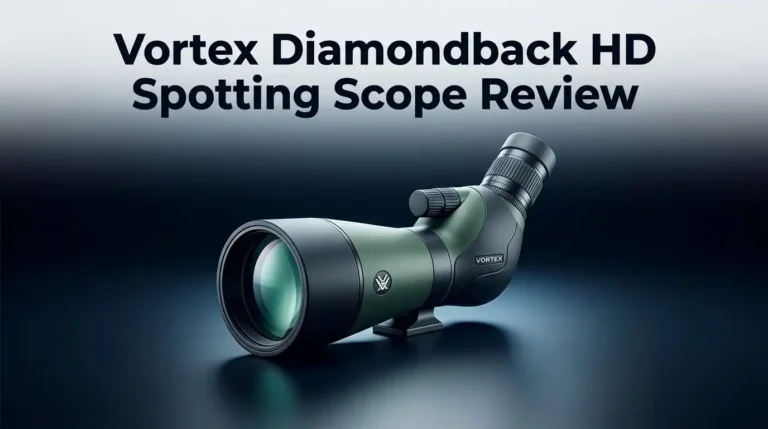
Vortex Optics Diamondback HD Spotting Scope 20x to 60×85
Optical Performance in Daylight
Point the Wilderness 80mm at a distant subject in good light and the image is genuinely pleasing. At 20x the view is bright, wide, and crisp across most of the frame. Colors look natural with a slight warm cast. Contrast holds up well thanks to the multi coated lenses and the sunshade.
Sharpness stays strong through roughly 40x. I read a license plate at four hundred yards and counted feather barring on a red tailed hawk at similar distance. Center sharpness is the scope’s strength.
Edge performance softens, and chromatic aberration shows as purple fringing on high contrast edges, like a dark branch against bright sky. This is expected without ED glass. If you mostly center your subject, the fringing rarely bothers you. Pixel peepers and digiscoping fans will notice it immediately.
Low Light and Dusk Performance
An 80mm objective gathers real light, and the Wilderness uses it reasonably well. During the last thirty minutes before sunset the image stayed usable at 20x and 25x. Deer at the field edge remained identifiable when binoculars had already given up.
Push the zoom higher and the picture collapses faster than premium glass would. At 60x the exit pupil shrinks to about 1.3mm, which is simply too small for dim conditions. The view turns dark, grainy, and hard to focus.
My practical advice is to treat 20x to 35x as the dawn and dusk working range. Use the top end only in bright daylight. Buyers who mostly glass in low light should look at scopes with ED or HD glass, since coating quality alone cannot fix the physics here.
Zoom Eyepiece and Focus Feel
The zoom collar sits right behind the eyepiece and turns with moderate resistance. It does not creep on its own. Moving from 20x to 60x takes a short twist, and the image stays roughly parfocal, so you only need small focus corrections after zooming.
Focus comes from a single large knob on top of the barrel. The action is smooth but the throw is long, which means slow adjustments when a bird moves closer. Fast moving subjects test your patience. Hunters tracking animals across a canyon will feel this most.
Eye relief runs from about 18mm to 21mm. Eyeglass wearers can see most of the field with the rubber eyecup folded down. The cup folds rather than twisting up and down, which feels dated but works fine.
Meade Wilderness 15x to 45x65mm Model

Last update on 2026-09-25 / Affiliate links / Images from Amazon Product Advertising API Some of the links on this website are affiliate links, which means that at no additional cost to you, I earn a commission if you click through and make a purchase. I only recommend products and services that I believe will add value to my readers. Thank you for your support!
The 65mm version deserves its own mention because it solves the weight problem. It weighs roughly two pounds less than the 80mm and shortens by several inches. That difference decides whether a scope rides in your pack or stays in the closet.
Magnification runs 15x to 45x. Lower top end sounds like a downgrade, but the smaller scope stays sharper across its whole zoom range because it never asks the glass to do too much. Image brightness at 30x is respectable.
This is the model I recommend for hikers and travel birders. You also save money and can run a lighter tripod, which compounds the savings. The 80mm still wins on pure image quality when you can drive to your spot and set up a heavy rig.
Digiscoping with the Included Adapter
The included camera adapter is a nice touch that comes with a catch. It threads onto the eyepiece and accepts a T ring, which then mounts a DSLR or mirrorless body. The T ring is not included, and it must match your camera brand.
Results are mixed. Prime focus shots through the scope are soft at the corners and show the same purple fringing noted earlier. Bright light and low magnification produce the best files. Anything at 50x or above turns mushy.
Smartphone digiscoping actually works better for casual use, but you must buy a separate phone bracket. No phone adapter ships in the box. If photography drives your purchase, an ED glass scope will reward you far more than this one.
Tripod Requirements and Setup Advice
Do not skip this section. The 80mm Wilderness weighs enough to overwhelm a cheap photo tripod. Vibration at 40x turns a sharp image into jelly, and beginners often blame the scope when the tripod is the culprit.
Look for a tripod rated well above the scope weight with a fluid pan head. A fluid head matters more than carbon fiber legs because smooth panning is how you track wildlife. Budget at least eighty dollars for a decent one, more if you glass in wind.
The scope has a standard quarter inch thread, so mounting is simple. An Arca style quick release plate saves real time in the field. For the 100mm model, treat a heavy duty tripod as mandatory rather than optional.
What the Meade Wilderness Does Not Do Well
Honesty time. This scope has clear limits and you should know them before ordering.
The top of the zoom range is mostly marketing. Usable magnification ends near 45x, so the 60x number oversells what you get. Edge sharpness falls off and color fringing shows on bright edges, both symptoms of standard glass rather than ED elements.
The focus throw is slow for action. The soft case offers minimal protection. The eyecup folds instead of twisting, which is less precise for glasses wearers.
The biggest issue in 2026 is availability. Several major retailers now list Wilderness models as discontinued by the manufacturer. Stock shows up sporadically and pricing jumps when it does. Warranty support on a fading product line is a fair concern too.
Pros and Cons
Pros
- Tough rubber armored body that shrugs off rain, dust, and rough handling
- True waterproof and fog proof sealing with nitrogen purging
- Bright, sharp center image from 20x through roughly 40x
- Rotating tripod collar that makes odd viewing angles comfortable
- Sliding sunshade cuts glare and shields the objective in drizzle
- Soft case and camera adapter included at no extra cost
- Strong value when you find it at street price
- Three objective sizes let you match weight to your use
Cons
- Image quality drops sharply above 45x magnification
- Purple fringing appears on high contrast edges
- No ED or HD glass at any point in the lineup
- Long focus throw slows tracking of moving subjects
- The 80mm and 100mm models are heavy for backpacking
- Tripod and T ring are not included
- Soft case padding is thin
- Spotty availability and discontinued status at many dealers
Price and Value in 2026
Street pricing on the 80mm model has historically sat between two hundred and three hundred dollars. The 65mm runs lower and the 100mm runs higher. At those numbers the value story is solid, because build quality punches above the price.
The trouble is that discontinued products drift upward. Some listings now ask premium money for a scope that was designed as a budget option. That changes the math completely. Paying four hundred dollars for non ED glass makes little sense when ED competitors sit nearby.
My rule is simple. If you find the 80mm near two hundred and fifty dollars, buy it with confidence. If sellers want more than three hundred and fifty, compare alternatives first. Value depends entirely on the price you actually pay.
Who Should Buy the Meade Wilderness
This scope fits specific people very well. Casual birders who watch feeders, shorelines, and open fields will love the bright low power views. Hunters who need a durable scope for scouting will appreciate the armor and the sealing.
Target shooters get real use from it. Spotting bullet holes at one hundred and two hundred yards is easy work for this glass, and the rotating collar helps at the bench.
It is a poor fit for three groups. Serious birders chasing fine plumage detail at distance will want ED glass. Wildlife photographers will find digiscoping results disappointing. Backpackers counting ounces should choose the 65mm or skip spotting scopes entirely and carry better binoculars instead.
Final Verdict
The Meade Wilderness is an honest scope with an honest weakness. Build quality, weather sealing, and low power image brightness are all strong. The glass simply runs out of ability at high magnification, and no amount of coating fixes that.
I rate it a solid buy at the right price and a skip at inflated prices. That caveat matters more in 2026 than it did five years ago, because supply has thinned and sellers have noticed.
If you want one, act when you see fair pricing. If the listings look expensive, the Celestron Ultima 80 and the Vortex Diamondback HD both deserve your attention. Either one gives comparable or better optics with easier availability and stronger warranty support going forward.
Frequently Asked Questions
Is the Meade Wilderness spotting scope waterproof?
Yes. The body is sealed and nitrogen purged, which makes it waterproof and fog proof. It handles rain, snow, and humid conditions without internal condensation. Do not submerge it, and dry the exterior before storing it in the case.
Does the Meade Wilderness come with a tripod?
No. A tripod is not included with any Wilderness model. You receive the scope, a soft carry case, a camera adapter, a cleaning wipe, and the manual. Budget separately for a sturdy tripod with a fluid pan head.
What magnification is actually usable?
Expect excellent results from 20x to about 40x on the 80mm model. Images remain acceptable to roughly 45x. Above that point brightness and sharpness fall off noticeably, especially in low light conditions.
Is the Meade Wilderness good for bird watching?
It works well for casual and intermediate birding. Bright low power views make shorebirds, raptors, and waterfowl easy to identify. Serious birders who need fine detail on small songbirds at distance should invest in an ED glass scope.
Can I use it for astronomy?
Yes, in a limited way. The 80mm and 100mm models show lunar craters, the Galilean moons of Jupiter, and bright star clusters. The 45 degree eyepiece angle and porro prism design limit high magnification astronomy, so keep expectations modest.
Is the Meade Wilderness discontinued?
Several retailers list Wilderness models as discontinued by the manufacturer. Stock still appears through various sellers, but availability is inconsistent. Check current listings carefully and confirm warranty terms before you purchase.

Hello, I’m Emily Price, the founder of Birds Affection. As a passionate bird enthusiast and spiritual seeker, I’ve always been fascinated by the symbolic meanings and mystical connections between birds and our lives. On this website, I share my knowledge and insights on the spiritual significance of various bird species, exploring their roles as messengers, guides, and teachers. Through my writing, I aim to inspire and educate others on the profound wisdom and beauty that birds bring to our world. Join me on this journey as we delve into the enchanting realm of bird symbolism and discover the hidden meanings behind these magnificent creatures.